Citizens Advice
Redesigning an accessible digital service to improve outcomes, reduce adviser pressure and unlock government investment.
Overview
My Role: Senior service designer + UX researcher
Client: Citizen’s Advice
Collaborators: Doing Good
Citizens Advice handles 825,000 contacts annually, with an estimated 10 million people attempting to self-serve across its digital channels each year. For those dealing with energy debt, unexpected bills or the risk of disconnection, the experience was particularly inadequate. Journeys were fragmented, content overwhelming and guidance too generic, pushing clients who needed personalised support towards an already stretched adviser workforce. The digital channels also had no way to capture the anonymised intelligence that the adviser service routinely shares with enforcement partners.
The brief
The brief was to design a personalised, accessible digital service that gives clients a clear route to resolution, frees adviser capacity and generates actionable intelligence for the wider consumer protection landscape – particularly for vulnerable users navigating energy debt, for whom the stakes of getting it wrong or falling through the cracks were highest.
With a major funding decision from the Department for Business and Trade on the horizon, Citizens Advice needed to test whether a better digital model was possible and build the evidence to back it.
The challenges
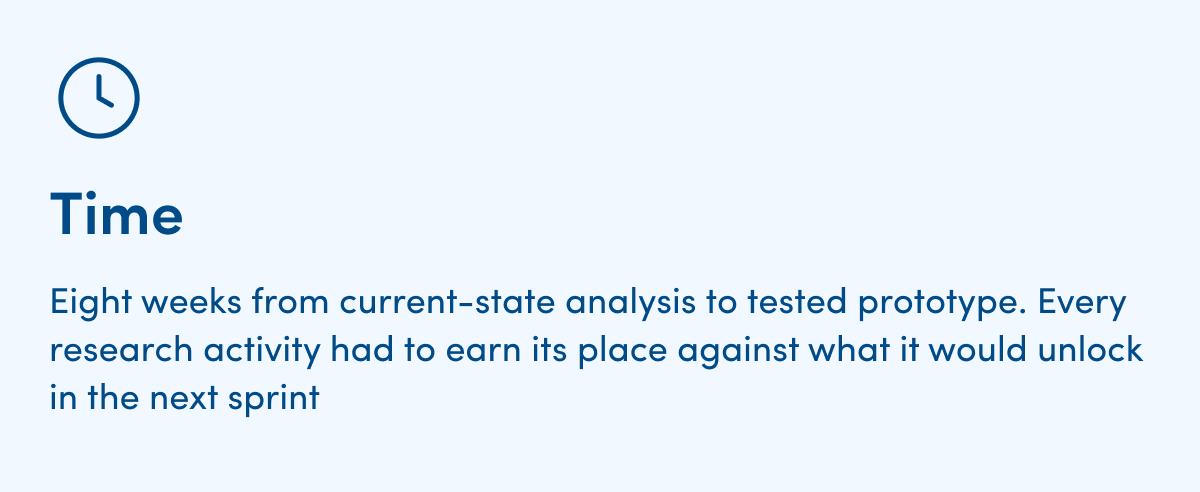
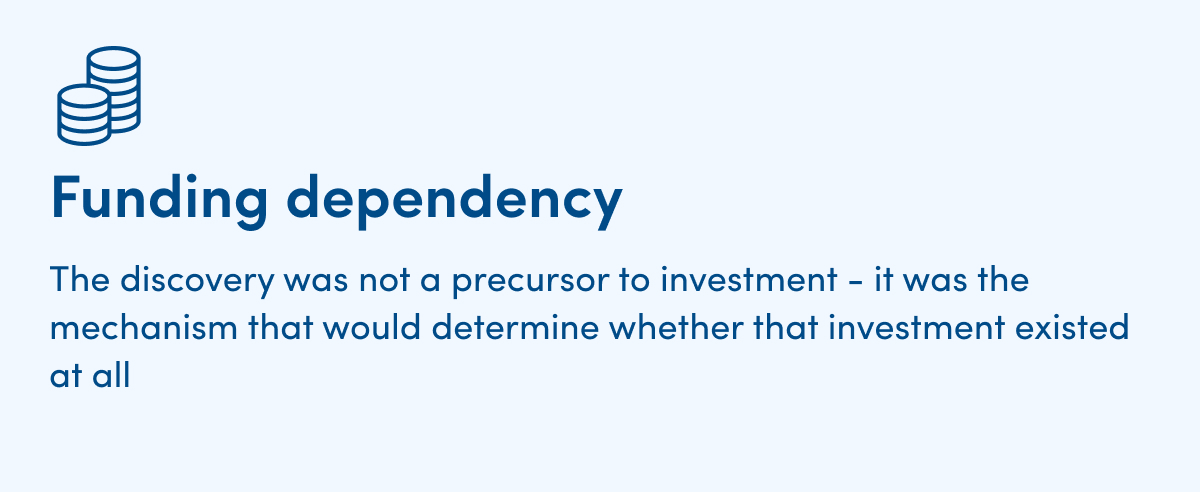
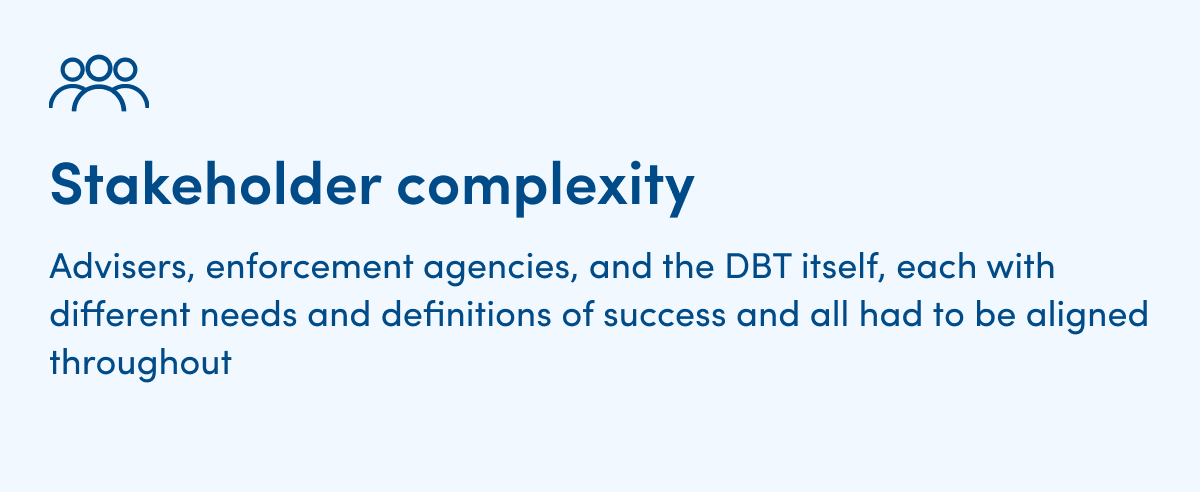
This project had four constraints that could not be solved one at a time: a short timeline, conditional funding, a complex stakeholder landscape, and another team already working on a related tool.
Rather than managing around them, they shaped the approach (a tight timeline is an argument for compression, not a reason to cut corners). That meant being ruthlessly selective with research methods and aligning stakeholders early enough that decisions did not have to be reversed later.
The Approach
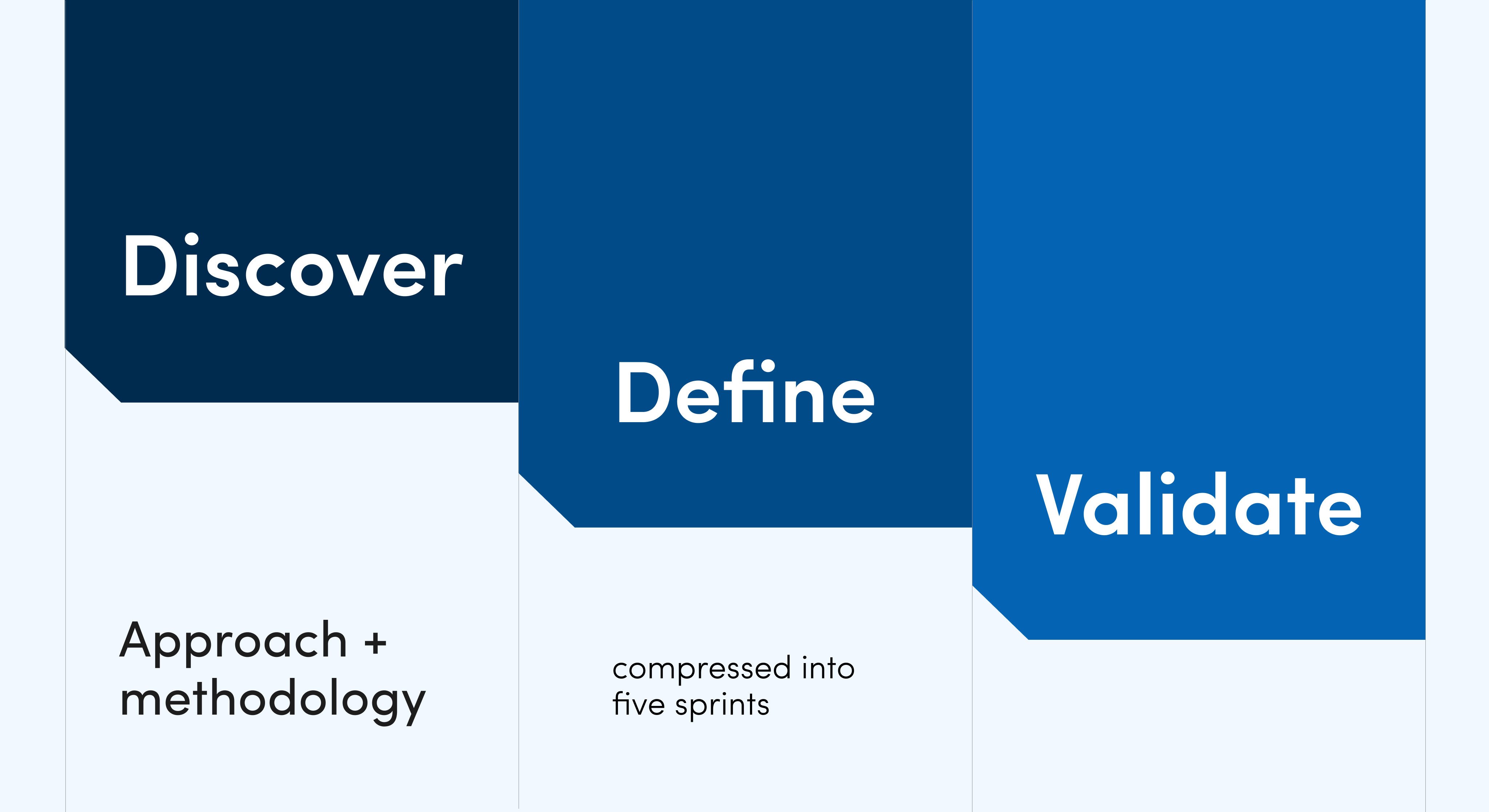
The approach followed a Discover, Define and Validate structure, informed by GDS Service Manual discovery principles and compressed to fit a ten-week, evidence-generating timeline. Working in fortnightly sprints generated visible progress from week one and maintained stakeholder buy-in and confidence throughout.
Co-design methodology
Co-design was central to the methodology. Advisers, stakeholders and operational staff were treated as collaborators from the outset, helping to surface assumptions, map pain points and validate journey concepts before prototyping began. Facilitated ideation sessions were supported by design provocation materials and examples from comparable services, with methods adapted to suit the needs of each group. Every design decision that emerged was documented and evidenced, creating a clear trail from insight to concept.

Decisions that shaped the work
Given the funding dependency, documentation was compressed and prototyping front-loaded. Producing low-fidelity journey concepts by Sprint 3 meant generating real-world responses from users rather than describing concepts that did not yet exist.
Advisers were both a key user group and the people with the most granular understanding of where the current service fails, so rather than treating them as interview subjects, they were brought into design sessions as collaborators.
This surfaced operational constraints early and built internal advocacy for the work. The prototypes were focused on energy debt specifically: the Gas and Electricity Complaints Handling Standard gives Citizens Advice the ability to compel energy companies to participate, and energy debt disproportionately affects vulnerable users, making it the highest-stakes context to design for. Coordinating with the AI consultancy from sprint one ensured both workstreams pointed in the same direction, and the final investment case presented a unified picture to DBT

Deliverables
All planned outputs were delivered within the ten-week timeline, structured to meet both Citizens Advice’s operational needs and DBT’s investment decision requirements.
- Two tested prototypes demonstrating improved client journeys across digital consumer advice, with accompanying analysis of adviser efficiency implications and identified user needs
- User research insights pack covering consumers (including marginalised groups), advisers and ecosystem stakeholders, providing a foundational evidence base for the broader digital transformation work
- Recommended digital advice model tailored to Citizens Advice’s service context, combining research findings, competitive landscape analysis and functional requirements
- Investment case and roadmap structured to directly address DBT’s programme requirements and support the funding decision for the £6m consumer service development fund
- Market landscape analysis, including an assessment of off-the-shelf solutions and an AI opportunity assessment developed in coordination with the existing consultancy
Reflection
The hardest part of this project was not the service design itself – it was making good decisions under conditions that weren’t able to flex. A ten-week timeline, funders who needed to see evidence, not just outputs, and another team already working on a related tool: none of those things could be negotiated away, so the approach had to be built around them.
What I took away was a clearer instinct for when speed is an asset and when it becomes a liability. Moving quickly to low-fidelity prototyping was the right call here, but it only worked because the co-design workshops were tightly scoped. Participants needed something concrete to react to, not an open brief. Knowing when to open up the problem space and when to close it down is something this project sharpened considerably.